
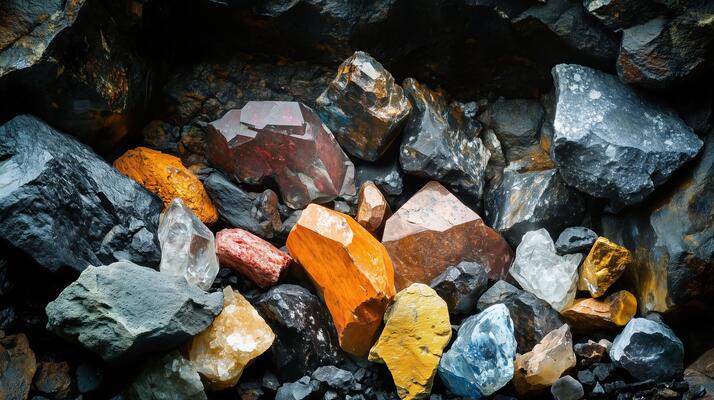
Pakistan is a land of unparalleled beauty with breathtaking mountains, lush fields, and vast deserts but beneath the surface lies one of the hidden treasures: Minerals.
From the rough slopes of Balochistan to the salt ranges of Punjab, Pakistan holds some of the richest mineral reserves in the region. Yet, the potential of these assets remains to a great extent undiscovered.
In this blog, we’ll investigate the sorts of minerals found in Pakistan, their geological distribution, the economic importance, and how this segment shapes the future of the nation, particularly in relation to businesses like construction and building materials.
A Glimpse into Pakistan’s Mineral Wealth
Minerals occur naturally in the substance and have significant value for industrial, commercial, and even for ornamental use. Pakistan has more than 92 different kinds of minerals, including precious metals, industrial metals, gemstones, and construction material.
Here are the wide categories:
- Metallic Minerals (e.g., gold, copper, lead, zinc, chromite, antimony and iron ore)
- Non- Metallic Minerals (e.g., limestone, gypsum, bauxite, potash, fireclay, bentonite clay, china clay, dolomite and rock salt)
- Energy Minerals (e.g., coal and uranium)
- Gemstones (e.g., emeralds, rubies, topaz, aquamarine, tourmaline and sapphires)
Key Minerals Found in Pakistan
1.Rock Salt
Rock salt is a valuable mineral that is found a lot in the salt range of Punjab, especially in the Khewra Salt Mine, which is the second biggest salt mine within the world. Salt mines are used for food, industrial processing, and decorative purposes. It also has growing demand in construction industries like marble decor and salt tiles.
2. Gypsum
Pakistan has a lot of gypsum, especially in the regions of Punjab, Sindh, KPK and Balochistan. It is broadly utilized within the cement industry, plaster of Paris, and fertilizer production. The growing demand for gypsum continues to rise within the building materials field.
3. Limestone
A crucial ingredient in cement production, limestone is abundant in Punjab, Sindh and Khyber Pakhtunkhwa. The development industry depends on limestone intensely due to its quality, strength, and cost-effectiveness.
4. Coal
Pakistan boasts significant coal reserves, within the Thar Desert (Sindh) and Balochistan. Thar coal is considered one of the biggest coal deposits within the world. In spite of the fact that it’s fundamentally utilized for vitality production, coal ash is additionally utilized in certain concrete blends.
5. Copper and Gold
Balochistan’s Reko Diq and Saindak are wealthy in copper and gold. The Reko Diq project is one of the biggest undeveloped copper-gold mines all inclusive. If fully developed, it seems to boost Pakistan’s economy greatly and upgrade its industrial capacity.
6. Iron Ore
Iron ore reserves are found in Punjab, Sindh, KPK and Balochistan. All types of iron ore including magnetite, hematite and laterite are found in Pakistan. Iron is the spine of the steel industry, which is in turn vital for infrastructure advancement.
7. Chromite
Kohistan and Zhob are known for their rich chromite deposits, a crucial mineral used in crafting stainless steel and chrome plating. It is an export-worthy mineral with expanding worldwide demand.
8. Bauxite
In the world of aluminum production, Bauxite is a key player, with noticeable deposits found in Hazara. Khushab and Mianwali districts. As Pakistan’s development and automotive businesses develop, the request for aluminum and in this way bauxite is additionally on the rise.
9. Silica Sand
Silica Sand, abundant in Sindh and Punjab regions, is a fundamental component in glass fabricating, foundries, and construction projects. Its high purity and flexibility make it profitable for mechanical applications, especially within the production of concrete, ceramics, and optical glass.
10. Silica Quartz
Closely related to silica sand, silica quartz is used within the glass, electronics, water treatment and ceramic industries. Mostly deposits are found in KPK, and its high chemical purity makes it a sought-after mineral for high-tech businesses.
11. Pumice Stone
Pumice stone is a lightweight volcanic rock used in construction blocks, cosmetics, textile and water filtration system. Its porous nature and low density make it an essential material for eco-friendly construction.
12. Bentonite
Bentonite is a clay mineral used in oil penetrating, foundry molds, iron ore pellitizing, animal feed, and waterproofing applications. Pakistan’s major Bentonite reserves are located in Punjab, Sindh and Azad Kashmir, and the minerals are in high demand both locally and globally.
Gemstones: Nature’s Extravagance
Pakistan is a gem lover’s paradise filled with precious stones like:
- Emeralds from Swat
- Topaz from Gilgit
- Rubies from Azad Kashmir
- Aquamarine and Tourmaline from Skardu
These valuable stones are not fair and excellent; they’re also a significant source of trade income. However, the need of present day mining methods and talented gem-cutting facilities limits Pakistan’s share within the worldwide gemstone showcase.
Economic Importance of Minerals in Pakistan
Pakistan’s economy is essentially agricultural, but the mining and minerals sector has the potential to be a game-changer. Here’s how:
1. Revenue Era
Minerals can bring in billions in neighborhood and remote trade in case legitimately extracted, handled, and exported.
2. Job Creation
A flourishing mining sector might utilize thousands in mining, transportation, refining, and fabricating businesses.
3. Industrial Development
Limestone, gypsum, pumice stone and iron ore, these minerals are the building blocks of our nation’s growth. They fuel our cement, construction, and steel industries, driving progress and shaping our future.
4. Infrastructure Progression
Openness of local building materials like sand, rock, and limestone diminishes dependence on imports, bringing down costs and speeding up establishment projects.
Challenges to the Mining Sector
In spite of these immense reserves, Pakistan’s mineral industry faces a few challenges:
Outdated Mining Methods
Manual and semi-mechanized strategies result in low efficiency and security dangers.
Need of Investment
Remote and nearby investors are reluctant due to lawful ambiguities, political insecurity, and conflicting arrangements.
Smuggling and Unlawful Mining
Unregulated extraction leads to misfortune of national income and natural corruption.
Poor Foundation
Numerous mineral-rich ranges need appropriate streets, control, and water offices, making transport and handling difficult.
The Way Forward: A Vision for Progress
To really open the potential of Pakistan’s mineral assets, the nation needs:
Policy Change
Straightforward and reliable mining approaches can draw in worldwide financial specialists and guarantee reasonable asset utilization.
Cutting-edge Innovation
Embracing worldwide best practices in extraction, security, and maintainability can improve yield.
Training and Education
Talented labor and experts can essentially progress the proficiency and esteem expansion of the sector.
Public-Private Organizations
Collaboration between government bodies and private companies can scale up infrastructure and guarantee capable mining.
Conclusion
The construction sector is one of the essential shoppers of minerals. Whether it’s cement from limestone, tiles from rock salt, or steel from iron ore, minerals are actually the building pieces of our homes, bridges, schools, and workplaces.
This is often where companies like MIZ Builders play an imperative role. As a company established within the soil of Pakistan, MIZ Builders takes pride in supporting nearby businesses and elevating the national economy through its solid fabric sourcing and client-centric approach.
